Anaheim Ducks Tickets
Southern California hockey excitement featuring fast-paced action and fierce Pacific Division rivalries.
Buy Tickets
TIXpick — Your Destination for Live Event Tickets
Discover concerts, professional and college sports,
Broadway musicals, theater productions, and other
live entertainment. Explore upcoming events, compare
available ticket listings, and find seating options
for popular performances nationwide through our
affiliation with TicketNetwork.
TIXpick may earn a commission on qualifying purchases.
Find tickets for your favorite NHL teams.
Southern California hockey excitement featuring fast-paced action and fierce Pacific Division rivalries.
Buy Tickets
An Original Six powerhouse celebrated for its championship tradition, physical play, and passionate fans.
Buy Tickets
Buffalo's passionate hockey tradition brings energetic crowds, emerging talent, and exciting NHL action.
Buy Tickets
Alberta hockey pride, spirited competition, and the legendary Battle of Alberta rivalry.
Buy Tickets
Relentless forechecking, high-energy hockey, and an electric atmosphere fueled by the Caniacs.
Buy Tickets
Historic Original Six hockey combining Stanley Cup tradition with a new generation of talent.
Buy Tickets
Explosive speed, elite offensive skill, and championship-caliber hockey in the Mile High City.
Buy Tickets
Hardworking hockey, dedicated Ohio fans, and the unmistakable energy of the Blue Jackets cannon.
Buy Tickets
Texas-sized hockey excitement featuring talented scorers, strong defense, and passionate Stars fans.
Buy TicketsFind tickets for your favorite NHL teams.

Hockeytown tradition, legendary championships, and passionate fans make Detroit a historic NHL destination.
Buy Tickets
Electrifying offensive hockey, superstar talent, and a proud Stanley Cup championship heritage.
Buy Tickets
Championship-winning intensity, relentless forechecking, and exciting South Florida hockey action.
Buy Tickets
Southern California hockey tradition, Stanley Cup glory, and thrilling Pacific Division rivalries.
Buy Tickets
Experience the State of Hockey's passionate crowds, skilled players, and hard-fought NHL competition.
Buy Tickets
The NHL's most decorated franchise, renowned for its Original Six heritage and devoted fans.
Buy Tickets
Smashville excitement brings intense hockey, roaring crowds, and Music City's unforgettable game-night energy.
Buy Tickets
Speed, youthful talent, and a three-time Stanley Cup championship legacy define Devils hockey.
Buy Tickets
Long Island hockey pride, four consecutive Stanley Cups, and a fiercely loyal fan base.
Buy Tickets
Original Six prestige, legendary rivalries, and unforgettable hockey at Madison Square Garden.
Buy TicketsFind tickets for your favorite NHL teams.

Canada's capital brings passionate fans, exciting young talent, and fierce Atlantic Division rivalries.
Buy Tickets
Philadelphia hockey tradition blends gritty competition, historic rivalries, and fiercely loyal fans.
Buy Tickets
Superstar hockey, five Stanley Cup championships, and a proud tradition of offensive brilliance.
Buy Tickets
Silicon Valley hockey features emerging talent, Pacific Division battles, and the Shark Tank atmosphere.
Buy Tickets
Seattle's NHL franchise brings Pacific Northwest passion and thrilling hockey to Climate Pledge Arena.
Buy Tickets
Gateway City hockey showcases passionate crowds, hard-fought rivalries, and a Stanley Cup legacy.
Buy Tickets
Championship pedigree, elite hockey talent, and electrifying game nights in Tampa Bay.
Buy Tickets
Original Six heritage, iconic rivalries, and generations of passionate Toronto hockey supporters.
Buy Tickets
Utah's NHL franchise brings a bold new hockey identity and exciting action to Salt Lake City.
Buy Tickets
Stanley Cup champions known for spectacular pregame shows and thrilling Las Vegas hockey.
Buy Tickets
Pacific Coast hockey excitement, passionate Canadian fans, and intense Western Conference rivalries.
Buy Tickets
High-powered hockey, historic scoring achievements, and passionate fans in the nation's capital.
Buy Tickets
Manitoba hockey pride, fierce competition, and the unforgettable roar of Winnipeg's devoted fans.
Buy TicketsIce hockey developed from older stick-and-ball games played in Europe and later adapted to frozen conditions in Canada. Games involving curved sticks and wooden balls were played on ice for generations, especially in regions where long winters made frozen ponds and lakes natural settings for recreation. By the nineteenth century, versions of the game were becoming more organized, particularly in eastern Canada.
Early forms of hockey shared characteristics with field hockey, bandy, and other traditional stick-and-ball sports. As players adapted these games to ice surfaces, skating became an essential skill. The combination of speed, teamwork, and stickhandling eventually helped establish ice hockey as a distinct sport.
Canada played the central role in shaping modern ice hockey. On March 3, 1875, a landmark organized indoor hockey game was played at the Victoria Skating Rink in Montreal. Not long afterward, players and organizers began standardizing rules, team sizes, and equipment. The use of a flat puck instead of a ball became an important characteristic of the developing sport.
During the following decades, amateur clubs, schools, and regional leagues helped hockey spread throughout Canada. In 1893, the Stanley Cup was first awarded as a championship trophy. It eventually became the most prestigious prize in professional ice hockey and remains one of the sport's most recognizable traditions.
The National Hockey League (NHL) was founded in Montreal in 1917 and gradually developed into North America's premier professional ice hockey league. Initially centered in Canada, the league expanded into the United States and attracted increasingly large audiences through competitive rivalries, talented players, and championship contests.
The NHL's famous Original Six era featured the Boston Bruins, Chicago Blackhawks, Detroit Red Wings, Montreal Canadiens, New York Rangers, and Toronto Maple Leafs. Later expansion brought professional hockey to additional markets across the United States and Canada, helping transform the NHL into a major sports entertainment organization.
Ice hockey also developed a strong international following. European nations established competitive leagues and national teams, while international championships and the Winter Olympic Games brought worldwide recognition to the sport. Countries such as Canada, the United States, Sweden, Finland, and Czechia have produced generations of accomplished players.
Women's ice hockey has also experienced important growth, with expanding youth, collegiate, professional, and international competition. Women's Olympic ice hockey debuted in 1998, helping raise the sport's profile and inspire new generations of athletes and fans.
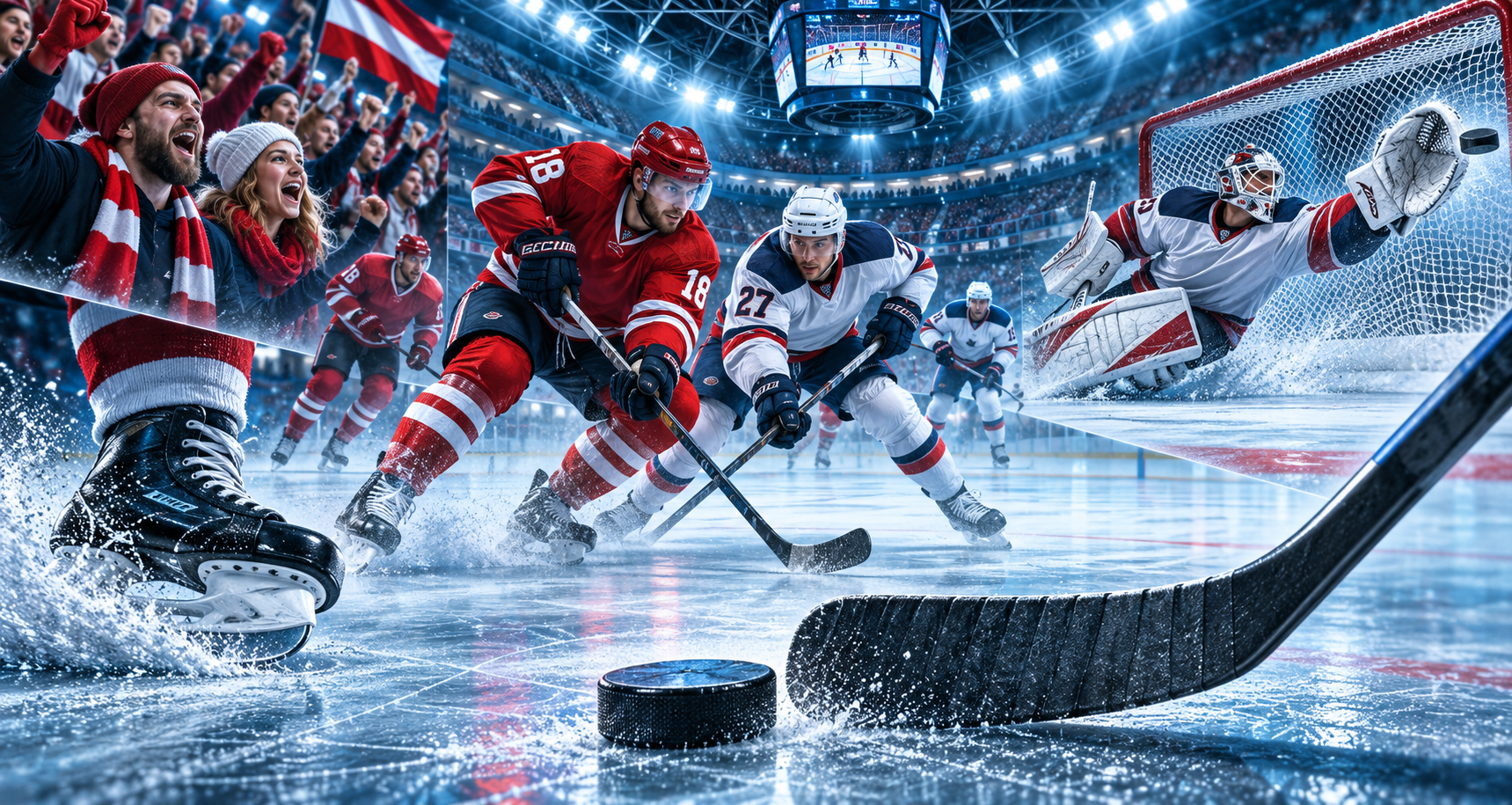
Today, ice hockey is celebrated for its speed, skill, physical intensity, and longstanding traditions. Professional hockey features elite skating, precise passing, powerful shots, spectacular goaltending, and fast-changing momentum. Teams compete throughout regular seasons and postseason tournaments, with the Stanley Cup Playoffs representing the ultimate championship pursuit in the NHL.
Beyond the professional ranks, ice hockey remains popular at the collegiate, junior, amateur, and youth levels. The excitement of live hockey, combined with passionate fans, historic rivalries, and dramatic overtime finishes, makes it one of the most engaging sports to experience in person.
Attending a live ice hockey game offers an exciting combination of speed, skill, and competitive energy. Whether you are planning to watch an NHL regular-season matchup, a Stanley Cup Playoff game, a college hockey rivalry, or a minor league contest, understanding ticket availability, seating options, and pricing can help you make an informed purchase.
NHL games typically attract large crowds, especially when popular teams, division rivals, or championship contenders meet. Stanley Cup Playoff games can generate particularly strong ticket demand. College hockey and minor league competitions also provide exciting opportunities to experience the sport, often at more affordable prices.
When selecting a game, consider the teams, venue, date, and importance of the matchup. Weekend games, rivalry contests, special promotions, and postseason events may attract higher demand than typical regular-season games.
Seating location can greatly influence your experience at a hockey game. Lower-level seats near the glass offer close-up views of the players, skating, and physical action. However, the boards and glass can sometimes limit visibility of plays developing elsewhere on the ice.
Seats several rows above ice level, particularly near center ice, often provide a balanced view of the entire playing surface. Upper-level seating may offer excellent overall sightlines at more economical prices. Fans who want to watch their favorite team attack twice may prefer seating near that team's offensive end during the first and third periods.
Hockey ticket prices vary according to the teams involved, seating location, game date, venue, and overall demand. Major rivalries and playoff matchups frequently command higher prices, while some weekday or less competitive regular-season games may provide better values.
Compare listings in different seating sections and review the total purchase price before ordering. Tickets offered through resale marketplaces may be priced above or below their original face value, and applicable service or delivery fees can affect the final cost.
Tickets for popular NHL games and sold-out hockey events may still be available through secondary ticket marketplaces. Resale listings can provide additional opportunities to attend games when primary ticket inventory is unavailable.
Last-minute ticket prices can fluctuate as game time approaches. While some listings may become more affordable, high-demand matchups can remain expensive or sell out completely. Buyers should also allow enough time for electronic ticket delivery and arena entry.
Many NHL arenas and other hockey venues use mobile ticketing systems. Before purchasing, confirm the accepted delivery method and review any instructions for accessing or transferring tickets. Some venues require tickets to be opened through an official mobile application or compatible digital wallet.
Plan to arrive early enough to pass through security, locate your seating section, and enjoy pregame activities. Check the venue's policies regarding bags, prohibited items, parking, and accessibility before traveling to the arena.
Postseason hockey schedules can depend on playoff results, television arrangements, and arena availability. Some tickets may be offered for games that occur only if a playoff series continues. Buyers should carefully review the conditions attached to any conditional playoff listing.
Game dates or starting times may change, and refund or exchange policies differ depending on the circumstances and ticket marketplace. Review applicable cancellation, postponement, and purchase terms before completing your transaction.
TIXpick.com helps visitors discover tickets for NHL games, college hockey, and other live sporting events through its affiliate relationship with TicketNetwork. Explore upcoming games, compare available seating options, and review ticket listings before proceeding to the linked ticket marketplace to complete your purchase.
Important Ticket Information: TIXpick.com is an independent ticket discovery and shopping website, not an official team box office, league representative, venue, or primary ticket seller. Tickets are offered by independent sellers through the linked marketplace, and prices may be higher or lower than face value. Availability, fees, delivery methods, and purchase terms vary by listing.